MTA C&D

PROJECT OWNER
LOCATION
CLIENT(s)
SERVICES PROVIDED
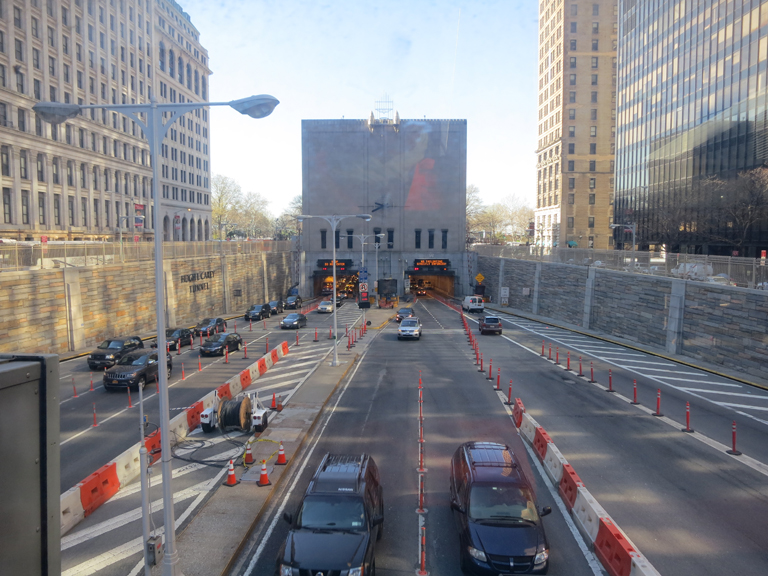
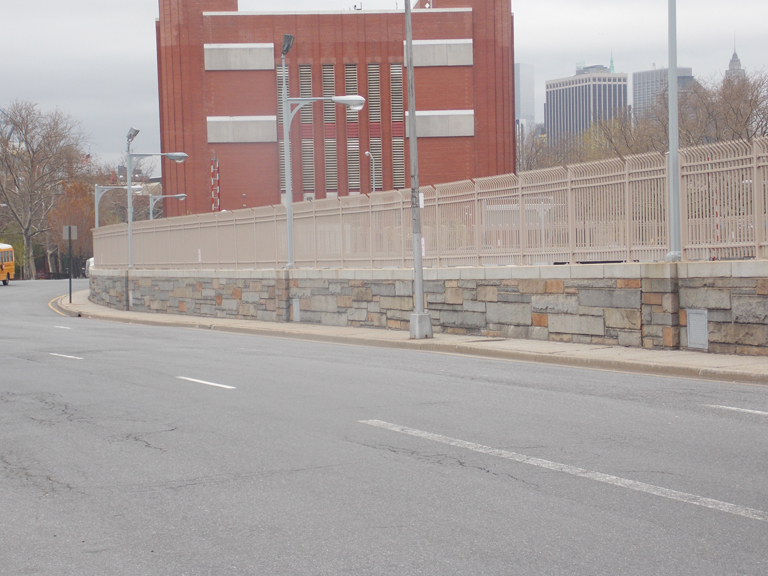
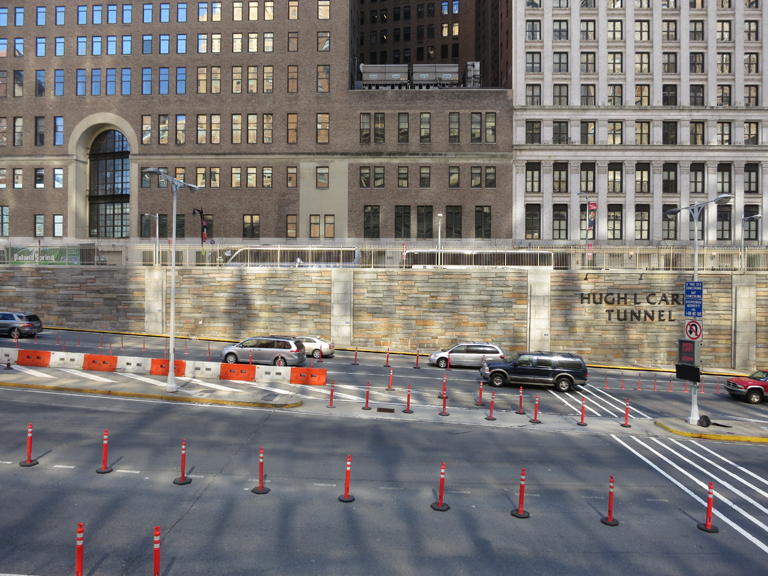
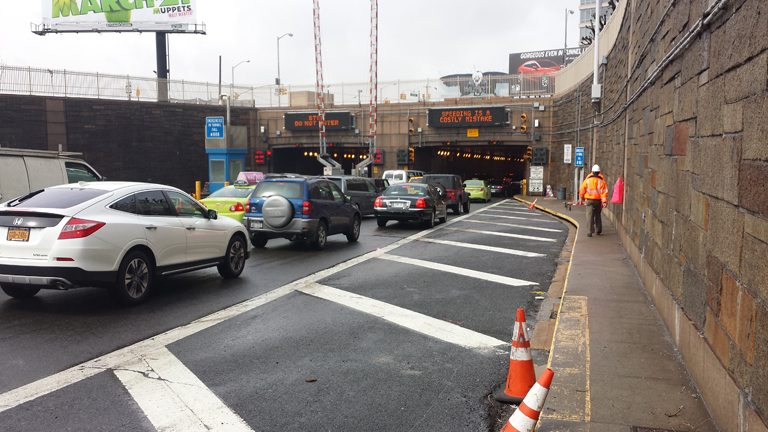
The storm surge from Hurricane Sandy caused tremendous damage to MTA Bridges and Tunnels, including the flooding of the Queens – Midtown Tunnel (QMT) and the Hugh L. Carey Tunnel (HLCT, aka Brooklyn Battery Tunnel or BBT). This project involved the analysis of the existing structures and preliminary design of flood mitigation measures to protect both the BBT and the QMT from future 100 year hurricane storm surges. As part of the Flood Mitigation Program, SJH was involved in the analysis of the HLCT and QMT Manhattan and Queens Plaza retaining walls and the QMT Queens Ventilation Building.
SJH served as a subconsultant for Structural Engineering design services for this project. SJH reviewed the Basis of Design Report, available as built plans and other details. SJH performed an analysis of the existing reinforced concrete retaining walls at the tunnel entrance plazas to confirm their capability to withstand the hydrostatic and hydro dynamic loads during a flood event. US Army Corps of Engineers EM 1110-2-2502 Retaining and Flood Walls was followed for load factors. Actual topographic survey and soil boring results were used in the analysis to reflect the correction elevations and varying soil pressure at each stratum. Due to the extensive length and varying height of the walls, a series of sections were taken based on the as-built drawings. Detailed STAAD Pro finite element models were created in order to accurately calculate the moments and shears at each section for subsequent capacity checks. A total of 42 sections were analyzed in two assumptions either with or without stone facing accounted for in the cross section to resist compression.
The QMT Queens Ventilation Building is a massive structure with five (5) levels below grade, five (5) floors above grade and more than 10,000 square feet at each level. SJH analyzed both the foundation walls and above grade walls following ASCE 7-10. A total of three (3) typical sections at the foundation wall and five (5) sections at the above grade wall were analyzed. STAAD Pro plate element models were used to accurately reflect the support conditions at the foundation walls and soil pressure at each stratum. Doors and door jambs were also analyzed at the critical location to provide a basis for potential strengthening or sealing in the event of a future flood event.
HNTB incorporated SJH’s analysis result in the preliminary design to develop a structure hardening scheme at each location. Other mitigation alternatives included perimeter protection using deployable Flood Control America (FCA) walls, deployable floodstop barriers, modifications to the existing parapet wall, a new reinforced concrete stone clad wall, a muscle wall at Con Edison’s vault, a resilient tunnel plug/tethered tunnel plug or Flex-Gate system for portal flood mitigation, utility penetration mitigation by backflow prevention devices, and watertight manhole covers.
RELATED PROJECTS