MTA C&D
PROJECT OWNER
LOCATION
CLIENT(s)
SERVICES PROVIDED
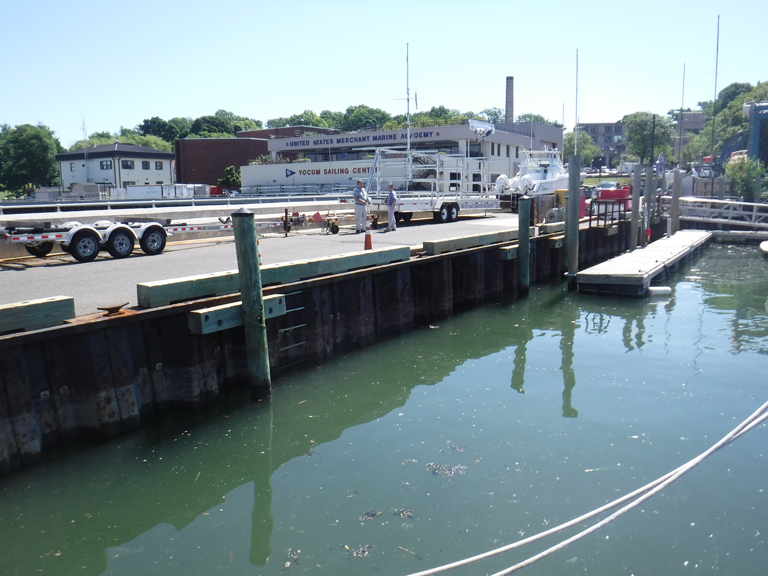
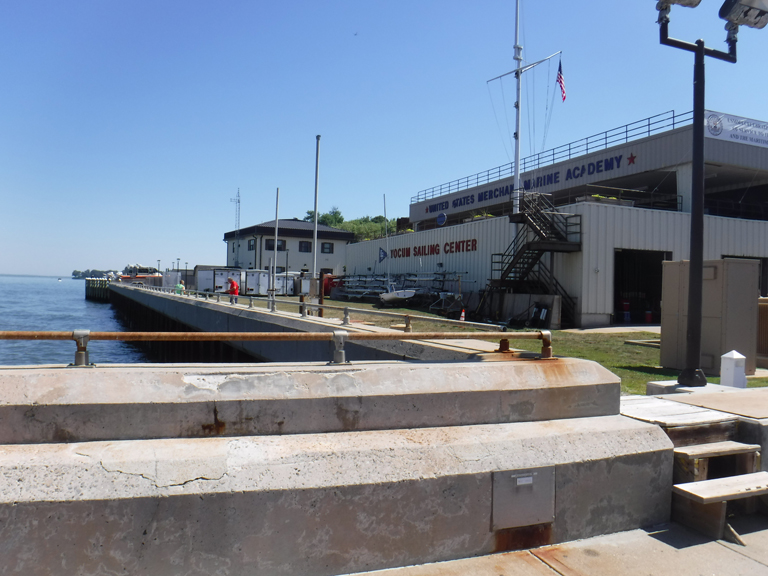
The United States Merchant Marine Academy (USMMA) is operated by the Maritime Administration of the U.S. Department of Transportation. Located in Kings Point, NY, the eighty-two (82) acre waterside campus lies on Long Island’s north shore. Mallory Pier was originally built in 1943. It was formerly used for the berthing training vessel King’s Pointer and was used primarily by the Liberator, other USMMA vessels, and Coast Guard vessels. It also provides access to floating docks and protects Hague Basin from waves off the Long Island Sound.
The 20,000 gross square foot (12,000 SF wood pier and 8,000 SF concrete pier) solid pier section closest to shore, is comprised of steel sheet piles and a concrete deck. The open pier section is constructed of timber piles with wood framing and deck. There is a stone rip rap wall along the Long Island Sound side of the timber pile section to help prevent wave action. SJH investigated the causes of settlement of roadway pavement near the circulation inlet of Mallory Pier. SJH developed a recommendation to correct the problem and prepared construction documents for bidding and awarding the construction contract.
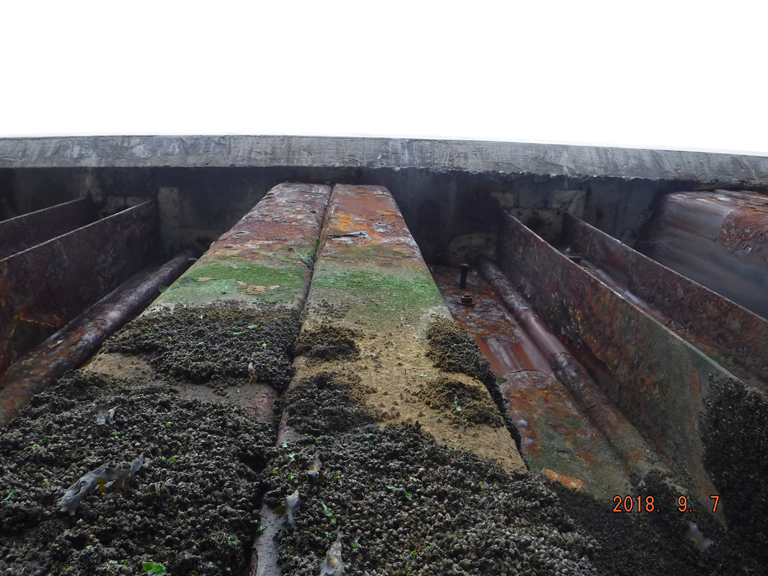
SJH performed a field inspection of the seawall around the inlet to determine the causes of the settlement. The inspection at low tide allowed for the inspection of the pier as well as the sheet piles. Settlement of the roadway pavement and corrosion holes in the sheeting was observed. In the past, the asphalt road surface had been repaired but with little improvement in fixing the road surface. Also, the sheet pile bulkheads were cording at a high rate. With worsening conditions, safety concerns for pedestrians and vehicular traffic arose.
The sheet pile walls on both sides (east and west) of the inlet consist of the original steel sheeting installed in 1943. The rehabilitation project in the 1990s did not address this section of sheet piles. All along the other bulkhead, new sheeting has been installed in front of the existing piles; However, new sheeting was not installed on both sides of the inlet. During the inspections, it was confirmed that the existing sheeting along both sides of the inlet was corroded and deteriorated with holes and therefore, is unable to retain the earth fill behind them.
There are some existing utilities spanning across the inlet. These utilities will be protected during the new construction. In addition, there are ‘tie rods’ connecting the existing sheeting along the pier. Any new construction should not interfere with these ‘tie rods’. Installing the new sheeting behind the existing sheeting will avoid work in the water, and the resulting permits from the Army Corps of Engineers. This will avoid delays due to these permits.
RELATED PROJECTS